📋1The inspection schedule now answers from your country's own document, for 14 installation typesNew in build 202
The inspection schedule no longer prints the same six standards for every country: it answers from the document the selected country actually works to. United Kingdom: BS 7671 Part 6 with IET Guidance Note 3 Table 3.2, including its routine-check column. IEC and the European adoptions: the informative table in IEC 60364-6 and the national HD 60364-6 editions, quoted through BS 7671 and the national texts, because this build does not hold the IEC document itself. United States: NFPA 70B and ANSI/NETA MTS, because NFPA 70 fixes no inspection interval of its own. France: the workplace and ERP verification regime, which sets nothing for a private dwelling and says so. Australia and New Zealand: AS/NZS 3019 with the New Zealand and state regulations. South Africa: SANS 10142-1 and its certificate-of-compliance regime. Canada: CSA C22.1. Those last three are held and state no calendar maximum, so the page says exactly that instead of inventing one. A country whose document is not held — Morocco's NM C 15-100, Algeria's DTR E 10.1 — gets an advisory answer, with no borrowed French figure. The page answers for 14 installation types: dwellings, rented dwellings, HMO, commercial, industrial, hospital, medical location, hotel, caravan park/marina/pool, agriculture, construction site, hazardous area, emergency lighting and fire alarm, and highway supplies. The country flag sits left of the country name and of the code name, inputs and outputs share one result card, and what you see is what prints: the same sheet you Save, Email or open with Preview — exactly what prints.
⛈2AS/NZS 1768:2007 lightning risk now prints the standard's own arithmetic, both of its answersNew in build 200
AS/NZS 1768:2007 does not adopt IEC 62305-2, so the page runs the standard's own method. Clause 2.3.3 and Table 2.2 set the tolerable risk: Ra = 1e-5 per year for loss of human life, 1e-3 for loss of service and 1e-3 for heritage structures. Clause 2.5.2 chains the risk, Rx = Nx × Px × Δx, over four categories: human, service, heritage and economic. Appendix A3 holds the equations and the factor tables, including the collection area Ad = L×W + 6H×(L+W) + 9πH²: for a 20 × 20 m structure 40 m tall, Ad = 0.05523893 km², Nd = 0.1657, Nm = 0.4845, and the worked example gives R = 4.806e-6 against Ra = 1e-5, which is tolerable. AS/NZS 1768:2021 is the current edition: this app implements the 2007 edition it holds and says plainly that the 2021 tables are not held. The standard also contradicts itself on that same example — its A2 summary sheet gives 1.07e-5, its A3 hand chain gives 4.806e-6 — so the page prints both and says which is which. The calculator is routed to AS/NZS 3000, Fiji's Electrical Regulations 2019, PNG GS 1022, and the Vanuatu, Solomon Islands, Samoa and Tonga standards that adopt 1768.
🌍3Earth electrode resistance now answers to twelve national rule familiesNew in build 198
Earth resistance used to be one IEC figure on every page. It now reads the rule family the country actually works to, and the twelve families are exhaustive: no page falls through to a default. IEC 60364-4-41 clause 411.5.3 measures the product, Ra × IΔn ≤ 50 V, which is 1667 ohm on a 30 mA device. BS 7671 regulation 411.5.3 and Table 41.5 set the same product in British wording. NF C 15-100 clause 771.411.3.2 prints a flat 100 ohm. ABNT NBR 5410 clause 9.2.4.1 keeps its own arithmetic. NFPA 70 250.53(A)(2) Exception 1 gives 25 ohm as a threshold, so the page prints it as a note and never as a fail. AS/NZS 3000 clause 5.3.6, CSA C22.1 Rule 10-700, SANS 10142-1 clause 8.6.7, GB 50054 and PUE 7 are held but publish no number: each of those pages prints an advisory naming its own document and withholds every figure.
🌐4The whole transformer fault sheet now reads in sixteen languagesNew in build 198
The transformer fault calculation was translated on the screen and left in English everywhere else. The whole sheet now travels with the site language: the hero headline, the rule paragraph for each standard family, the impedance basis, the limiting requirement, the worked example, the formula note and all 31 result rows. Standard designations and clause numbers are deliberately left as published — BS 7671 stays BS 7671, Table 41.5 stays Table 41.5 — so a sheet read in Polish or Arabic still points an inspector at the same line of the same document. Numbers, units and symbols are untouched; only the words around them change.
⚡5Bangladesh’s lightning risk index is now a calculator, not a lookupNew in build 198
BNBC 2020 Part 8 Section 1.3.33 does not adopt IEC 62305-2, so the page now runs the code’s own method. Seven indices are read from the building and summed, then set against the marginal Risk Index of 40. The 53 m rule settles every case that reaches it. One air termination spike is required per 80 m² of roof plan. The down-conductor rules cover cross-section and the 30 m perimeter. Earth limits are 10 ohm, and 2 ohm in the cases the code names. A scope note prints what the method does not assess, so nothing is read into the number that the code does not put there.
⚡6Transformer fault level now answers to your country’s own documentNew in build 196
Transformer fault level used to fall back on IEC 60909 for every country the page could not name. It now names the document behind the answer. IEC 60909-0 applies its voltage factor c: 1.05 at low voltage, 1.10 above 1 kV. BS 7671 Appendix 14 works on nominal voltage with the distributor’s declared fault level, so the same transformer reads about 5 % lower. AS/NZS 3000 clause 2.5 keeps the same nominal basis. NFPA 70 writes no short-circuit formula: the current comes from IEEE 141 and Article 450.3 sets the protection. Where this build holds no clause for a country, the page names that country’s document and prints no figure.
🏠7Canada’s receptacle spacing is now a calculatorNew in build 196
Canada fixes a spacing, not a count per room. CE Code Rule 26-712 says no point on a finished wall may sit more than 1.8 m from a receptacle, and no point on a kitchen counter wall line more than 900 mm. Enter the wall length and the page returns the number of receptacles and where they go. It quotes the 2015 CE Code Handbook we hold, cites Rule 26-712 on every line, and stays silent where the rule does not apply: a run under 900 mm, a wall a doorway breaks, a receptacle above 1.7 m.
⚖8The calculator follows the code you choose, not your addressNew in build 192
Pick the code a job is judged by, separately from the country and the language the app runs in. A French-speaking user in Belgium can open a calculator and work to BS 7671: the page shows the flag of the country that code belongs to and cites BS 7671 clauses, while the app's own country, language and units stay theirs. The choice is remembered, so the next job opens on the same code.
🔌9Transformer inrush now cites the rule that governs itNew in build 192
The transformer-inrush calculator no longer answers in IEC alone: it names the national rule of the standard you work to, NFPA 70 Article 450.3 in the United States, BS 7671 Chapter 43 in the United Kingdom, IEC 60364-4-43 and its national editions elsewhere, and prints the clause it applied. Where this build does not hold that country's method for the check you asked for, it prints an advisory card saying so instead of a verdict.
🌌10Every country’s lightning method, now namedNew in build 191
Sixty-four countries used to read “no lightning standard recorded”. Each now names the document that governs it — GB 50057 in China, JIS A 4201 with JIS Z 9290 in Japan, SO 153-34.21.122 in Russia, CAN/CSA-B72 in Canada — and the IEC calculator is withheld wherever that document uses another method.
⚡11Discrimination judged by your code, not by IEC aloneNew in build 191
Selective coordination now names the rule you work to: IEC 60364-4-43 with IEC 60947-2 Annex A, BS 7671 clause 536.4, NF C 15-100 clause 434, AS/NZS 3000 clause 2.5.5, NBR 5410 clause 6.4, GB 50054 or NFPA 70 Article 240.86 — and where the national rule is not a numeric table this build holds, it says so instead of borrowing one.
🛡12The Toptronic® LIFETIME Warranty, on every build we shipNew in build 190
If a feature of the product you bought does not work on your hardware, we make it work — for as long as your maintenance is entitled. Claim it in one click from Help, in the app or on this page.
⛈13Lightning risk answered in your own country’s codeNew in build 190
The lightning risk page now names the method your country actually uses — IEC 62305-2, EN 62305-2, NFPA 780, AS 1768, NF C 17-102 or ABNT NBR 5419 — and shows the calculator only where this build holds the numbers.
⚡14Maximum Demand answers in the selected country's rulesNew in build 189
Maximum Demand now follows the country you picked: where a code publishes no numeric diversity table, the page says so instead of borrowing another country's numbers.
📚15Belarus, Kazakhstan and Montenegro in the reference tableNew in build 189
The reference table now carries Belarus, Kazakhstan and Montenegro, with clause-level detail for each code.
🔎16Search that ranks word starts firstNew in build 189
Word-start ranking in the app sidebar (Ctrl+K) and on this site, with arrow-key navigation and highlighted matches.
🌈17More colour from the electrical tradeNew in build 189
The Made Possible By wall gains a fresh set of colour logos from cable makers, switchgear brands, distributors and energy companies.
🇧🇾18Belarus, Kazakhstan and Montenegro coveredNew in build 188
Belarus's ТКП 339-2022 with Изм. № 1, Kazakhstan's ПУЭ РК (приказ № 230 of 20.03.2015, consolidated № 64 of 2022) and Montenegro's still-binding 1988 Pravilnik overlaid by HD 60364 each print their own supply, RCD, earthing and ampacity clause — and the gaps they could not verify.
🏳️19The right flag on every pageNew in build 188
A country page now flags the country it is about, not the country selected in Preferences. Opening Belarus while Belgium is selected shows the Belarusian flag, on screen and on the printed sheet.
📌20Preview without scrollingNew in build 188
The calculation bar is pinned: Preview — exactly what prints, Save, Print and Email stay on screen even on a ten-card country page, so the figures you checked are the figures you print.
🌎21Central America & the Caribbean coveredNew in build 187
El Salvador, Guatemala, Honduras, Nicaragua and the Dominican Republic join the Made Possible By wall and the search index, each with the regulator named: SIGET, CNEE, CREE, MEM and SIE.
🏛22Search finds the regulator, not just the nameNew in build 187
Type SIGET, CNEE, CREE, ENATREL or SIE, or the local name República Dominicana, sv, gt, hn, ni or rd, and the search opens the country page behind it.
🔤23Search that forgives typosNew in build 187
One wrong letter still finds the page: “SIGTE”, “ENATRLE” and “Domincan” reach their country pages through the Damerau-Levenshtein pass, which ranks below every exact and prefix hit.
📏24Country bend-radius limitsNew in build 186
The Cable bend radius page takes its minimum radius from the code you selected: NEC 300.34, 330.24 and 336.24, AS/NZS 3000 cl. 3.9.6, DIN VDE 0298-300 Table 1, SANS 10142-1 Annex E or the Canadian Electrical Code. The clause is printed beside the millimetre figure. Where a code publishes no table, the page says so and points at the manufacturer's figure instead of borrowing another country's.
🇵🇷25Puerto Rico NEC 2023 checkNew in build 186
Puerto Rico works to NFPA 70 as adopted by the 2023 NEC through the Puerto Rico Electrical Code, on a 120/240 V single-phase and 277/480 V three-phase 60 Hz supply: 5 mA GFCI on bathroom, kitchen and outdoor circuits, AFCI on bedroom branch circuits, and the NEC 3 per cent branch / 5 per cent total voltage drop.
🏳26Flag on every printed calculationNew in build 186
Every printed sheet carries the flag of the country whose standard produced the numbers, beside the standard's name in the header, so a printout handed to a client or an inspector says at a glance which code it came from.
🖨27Preview exactly what printsNew in build 186
The archive bar opens a preview that lays the sheet out on screen as the printer will: page breaks, header, flag and the clause lines. You see the sheet before it goes to paper, to PDF or by email.
🔎28Search reads your trade words, not just exact spellingsNew in build 185
Site search now folds accents, expands earthing / grounding, RCD / GFCI and MEN / TN-C-S, matches the start of a word and ranks a title above a body line, so “volt dropp” and “ca” still reach the page you meant.
🇳🇿29New Zealand: AS/NZS 3000:2018 on its own pageNew in build 185
The Wiring Rules and the Electricity (Safety) Regulations 2010 on one page: 230/400 V at 50 Hz, MEN earthing, AS/NZS 3112 outlets, the 5 per cent voltage-drop limit and New Zealand’s own bathroom zone boundary.
⚙30Cable pulling tension follows the country you selectedNew in build 185
The pulling-tension page takes the maximum pull, the sidewall pressure and the jam ratio from the code of the country in Settings instead of one IEC default, and prints the clause under the result.
⌨31Site search from the keyboardNew in build 185
Press / anywhere to open the search, move with the arrow keys, open with Enter and clear with Esc. The result list is a listbox, the count is announced, and every row keeps a visible focus ring.
🛡32Protective conductor sizing follows the selected standardNew in build 184
BS 7671 Table 54.7, NFPA 70 250.122, IEC 60364-5-54 Table 54.2 and AS/NZS 3000 Table 5.1 give four different protective-conductor sizes for the same circuit. The page now takes the table of the standard you selected and prints the clause, the printed page and the file it was read from under the result.
🇹🇼33Taiwan: 110/220 V 60 Hz under the Interior Wiring Installation RulesNew in build 184
Taiwan works to 屋內線路裝置規則, its own Interior Wiring Installation Rules, on a 110/220 V 60 Hz supply with dedicated earthing conductors. The app prints that instrument's own wording, clause and page where a verified table is held, and marks the row as a gap where it is not.
📏34Reglamento sobre Prevención de Incendios (1974) art. 36 makes COVENIN 200:2004 the installation code. The page quotes what it prints: 3 per cent branch and 5 per cent total voltage drop, 120 V lighting limit, 5 mA GFCI on socket, kitchen and bathroom circuits, 120/240 V single phase and 208/120 V three phase at 60 Hz, and the black/red/blue colour set.New in build 183
The tray page no longer assumes one IEC table for everyone. It takes the grouping factor and the tray-width series from the standard in Settings (IEC 60364-5-52 Table B.52.17, AS/NZS 3008.1.1 Table 26, the NEC 310.15(C)(1) adjustment and BS 7671) and prints the clause under the result, saying so where no verified table is held.
🇻🇪35Venezuela joins: COVENIN 200, the Código Eléctrico NacionalNew in build 183
Cable tray spacing now reads the standard you selected
🇧🇴36Bolivia joins: NB 777, a Bolivian code rather than an imported oneNew in build 182
Decreto Supremo 26302 Art 7(a) makes IBNORCA NB 777 a condition of supply, and NB 777-1:2024 is the current Part 1. The page quotes what the readable 2007 text prints: 2 per cent drop on a feeder and 3 per cent on lighting and socket circuits (5.1, 3.3, 3.4), Tabla 1 colours of blue / black / red phases with a white or light-blue neutral (neither the IEC nor the NEC set, so Bolivia got its own standard variant), 50 V touch voltage (10.4.1.1), a differential of 10 mA recommended on every branch circuit (10.3.5), and DS 26607's 380/220 V supply with a ±7.5 per cent band. What the instruments do not print is labelled as a gap.
📏37Conduit fill now takes its cable diameters from your standardNew in build 182
A 2.5 mm² single core and a 12 AWG THHN are not the same cable, so the conduit page stopped assuming one table. It now reads the diameters that belong to the standard you selected: metric 6491X / H07V values for IEC and BS 7671, NFPA 70 Chapter 9 Table 5 THHN diameters for the NEC family, AS/NZS 5000.1 V-90 for the Wiring Rules. It prints the source under the table and marks anything derived rather than printed by the standard.
🌐38The demand and diversity page now speaks your languageNew in build 182
The Int'l Demand & Diversity page had 253 pieces of English wording and no translation anywhere, so every locale read English. It now renders in all 50 app languages, along with the Barbados check page's own card titles and verdicts. The figures, the units and the clause behind each one do not change with the language — only the words around them do.
🇹🇨39Turks and Caicos Islands joins, with NFPA 70 as its installation ruleNew in build 179
Build 179 adds the Turks and Caicos Islands. The Electricity (Supply) Regulations reg 2(1)(a) adopt the NFPA 70 National Electrical Code by definition, "as amended or replaced from time to time", and reg 4 enforces it. The TCI Building Code reaches the same code indirectly through IBC 2701.1. The Canadian Electrical Code and BS 7671 are not adopted. Supply is 120/240 V single-phase three-wire and 120/208 V three-phase four-wire wye at 60 Hz, with a 277/480 V service for large customers; the statutory tolerance is plus or minus 6 per cent on voltage and 2.5 per cent on frequency. Earth resistance is 25 ohm or less at the service. Voltage drop is an NEC informational note only and cannot be enforced; the enforceable supply-quality limit is the utility's 4 per cent voltage-dip disconnection.
🖥40Every saved calculation now has a WYSIWYG preview before Print, Save or EmailNew in build 179
The archive bar on every calculator now opens a WYSIWYG preview of the saved sheet. The preview shows the page as it will print: the title, the inputs, the result, the clause behind it and the country flag where the calculator carries one. You can read the whole sheet before you print, save or email it, and the preview follows the same paper size and orientation you selected for the printer.
🛁41Bathroom and shower zones now change with the country you selectedNew in build 180
The bathroom calculator used to draw British zones whichever standard you picked. It now prints the geometry, the socket rule and the residual-current rule that the selected code actually states: BS 7671 zones 0-2 with the 3.00 m socket ban and 30 mA; the NEC 3 ft by 8 ft receptacle space with a Class A GFCI and no milliamp figure; four AS/NZS 3000 zones with Australia at 2.50 m and New Zealand at 2.25 m; French volumes and hors volume with no 3 m rule; DIN VDE 0100-701 Schutzbereich; SANS 10142-1 zone 3; and IEC 60364-7-701. Where a code prints no dimension, the row says so instead of showing another country's number, and every figure carries its clause.
🇰🇾42Cayman Islands joins — and both territories are now in the country listNew in build 180
Build 180 adds the Cayman Islands and makes every covered territory selectable in the country picker, with its own flag. Cayman adopts the NFPA 70 National Electrical Code twice: the Building Code Regulations reg 3(f) pin the 2014 edition as amended for building control, and the Electricity Regulations reg 2 and reg 65 apply the code current at any time for inspection and connection. Cayman prints its own NEC amendments and its own mandatory conductor colour code — 208 V wye red, blue, black; 480 V wye brown, purple, yellow. Supply is 120/240 V single-phase, 120/208 V and 277/480 V three-phase at 60 Hz, and no Cayman instrument prints a voltage tolerance, so the app prints none either.
🇧🇧43Barbados joins: BS 7671 by rolling reference, with a printed NEC limbNew in build 181
Electricity Regulations 1965 reg 3 binds every Barbados installation to the IEE Wiring Regulations “in force on the date of the completion”, so the edition rolls with the job: a 1995 installation is judged against the edition then in force, and today's work against BS 7671:2018+A4:2026. Reg 4 prints a discretion the island actually uses: where compliance is impracticable the Electrical Engineer may permit the NEC where American or Canadian materials are used. BLPC's handbook makes the most recent NEC part of its connection requirements by reference, and the Electricity Supply Act 2024 s.51 then gates connection on the Chief Electrical Officer's certificate and names no code at all. Supply is 115/230 V at 50 Hz with BLPC's printed ±6 % band (109–122 V and 218–244 V). Earthing is BLPC's 25 ohm beside BS 7671's RA × IΔn ≤ 50 V, insulation resistance is 1 MΩ at 500 V d.c., and the conductor colours depend on the year of completion because reg 3 rolls.
📚44The grouping calculator now follows the country you selectedNew in build 181
Grouping factors were one IEC table for everybody. They now come from the selected code, each with its own wording and clause: BS 7671 Table 4C1 and its “bunched in air” / “enclosed in a conduit or trunking” rows; HD 60364-5-52 Table B.52.17; NF C 15-100; AS/NZS 3008.1.2, which is what AS/NZS 3000 cl 3.5 sends you to; NEC 310.15(C)(1) current-carrying-conductor adjustment; SANS 10142-1; CSA C22.1 Tables 5C/5D; and DIN VDE 0298-4. Where no verified table is held for a code, the page says so instead of showing a neighbour's numbers.
🇧🇸45The Bahamas joins, with the Canadian Electrical Code as its installation ruleNew in build 178
Build 178 adds The Bahamas. Its installation code is CSA C22.1, the Canadian Electrical Code Part I, adopted by reference in the Electricity (New Providence) Rules r.2 and r.6 and the Out Islands Rules r.2 and r.5, and named in Bahamas Building Code 4401.1. NFPA 70 is not the Bahamian code. Supply is 120/240 V single-phase three-wire, 208Y/120 V and 277/480 V three-phase at 60 Hz. Conductor colours follow CEC Rule 4-032: A red, B black, C blue, neutral white, bonding green or green/yellow. Voltage drop is 3 per cent per feeder or branch and 5 per cent total (CEC 8-102).
📊46The demand factor calculator applies the standard selected in SettingsNew in build 178
The Demand Factor page takes its method from the standard chosen in Settings. Under a code of the NEC family it applies NFPA 70 2023 220.84: 45 per cent for 3 to 5 units, 28 per cent at 61 or more. Under the Wiring Rules it follows AS/NZS 3000 clause 2.2 Tables C1 and C2, and since the code prints no single factor per dwelling unit the page asks for the ks your own assessment produced. France uses NF C 14-100 and UTE C 15-105. Everywhere else the page states that no diversity table is recorded. Supply voltage and the breaker series come from the country profile.
🌐47Three country profiles open, and twelve translation gaps closeNew in build 178
Armenia, Libya and Uzbekistan each gained a real standard variant in build 178, so their country profiles now open from the Country Profile page instead of falling back to generic IEC 60364. Three calculator result-card headings and the eight strings of the calculations-folder picker are now translated in all 50 app languages. Choose a language and the page follows it: the figure, its unit and the clause behind it stay as they were, and only the words around them change.
🗂48The calculation archive bar speaks all 50 languagesNew in build 177
Save, Open saved, Print and Email now read in the language the app is already running in, not just English. Set the app to Spanish and the bar says Guardar, Abrir, Imprimir and Enviar. Three more calculators gained the bar in build 177, so their working can be saved, printed, mailed and reopened like the rest.
⚖49Three-phase load balance follows the country you selectedNew in build 177
The load balance page reads the country from Settings, and the Standard basis line names the rule it applied: the NEMA MG-1 bands where a code of the NEC family governs, the IEC 60034-26 guidance where a code of the IEC family governs, and a plain statement that the code fixes no limit everywhere else. The imbalance figure stays on the page, so you can see whether the spread sits inside the band that applies or outside it.
🇺🇿50Uzbekistan joins, with its installation rule and building norms namedNew in build 177
Build 177 adds Uzbekistan to the standards library and to the country check pages. The installation rule is the EUQ (ПУЭ), Elektr uskunalarining tuzilishi qoidalari, Section I, approved by order No. 84 of 13 February 2004 and amended in 2009. ShNK 2.04.17-2019 covers electrical equipment in residential and public buildings, and QR 05.06-23, recommendatory since 2024, covers erection and commissioning. Supply is 220 V single-phase and 380 V three-phase at 50 Hz, with earthing limits of 2, 4 and 8 ohm by line voltage. Figures the published part does not print are shown as gaps.
🇦🇲51Armenia joins, with a code quoted paragraph by paragraphNew in build 176
Build 176 adds Armenia to the standards library and to the country check pages. Two instruments carry the rule: the Electrical Installation Code approved by Decision 592-N of 21 April 2023, and the building norm HHSN 43-01-2025 that a designer works to. The page quotes what they print: 220/380 V at 50 Hz with a plus or minus 10 per cent band (HHSN cl. 151), TN-S or TN-C-S (cl. 359), disconnection in 0.4 s at 220 V (EIC table N40), 30 mA on every socket circuit (EIC cl. 297), and a 7.5 per cent voltage drop overall (cl. 152). Where the texts print nothing, the page says so instead of borrowing a Georgian or Russian figure.
📏52Points per circuit follow the country you selectedNew in build 176
The sockets and points per circuit page opens on the country from Settings and applies that country's own rule: how many socket-outlets one final circuit may serve, the load each outlet carries, and the clause that sets both. The ring and radial switch narrows the rule list to the topologies the code really defines. Where a code prints no outlet limit, the page says so in plain words and leaves the figure out rather than quoting a neighbouring country's number.
🏳53The printed colour sheet carries the country flagNew in build 176
Print the wiring colour code and each block heading now carries the flag of the country whose colours are printed beside it. The flag prints 4 mm high and takes its width from its own shape, so a tall pennant such as Nepal fits the heading without pushing the text aside. A sheet that mixes countries prints a flag on every block, and an international standard prints with none, because there is no single country to name. Landscape or portrait, A5 or A4, paper reads the same as the screen.
🇱🇾54Libya joins the library, and the supply regulation is quoted article by articleNew in build 175
Build 175 adds Libya to the standards library and to the country check pages. Because there is no installation code, the page quotes the supply regulation itself: 220/380 V at 50 Hz, the breaker sized to the contracted capacity, the GECOL meter with its 3 % tolerance, the written approval for private generation, and the 0.80 power-factor floor for motive power. It then lists what Libya does not print, so no Libyan figure is ever a number borrowed from Tunisia, Egypt or Europe.
💾55Save, print, email and reopen any calculationNew in build 175
Every calculator can now save its working. Press Save and the inputs, the result and the clause behind it are kept together. Print the sheet, email it, or open it again next winter and the page comes back exactly as you left it. Preferences holds one calculations folder with a sub-folder for each calculator, so a job from last winter is one click away.
🏠56Minimum points per room follow the standard you pickedNew in build 175
The minimum points page opens on the country you chose in Settings and prints the standard it applied, with the clause. Where that standard sets no numeric minimum for a room, the page says so in plain words instead of borrowing another country's number.
🇹🇳57Tunisia added, and the sidebar now finds any pageNew in build 174
Build 174 adds Tunisia and makes the sidebar a real search box. Type a tool, a country or a clause subject and the navigation narrows to the pages that match, with Ctrl+K to jump straight into it, and a Clear button to get everything back. The same build renames the British standard to BS 7671:2018+A4:2026, corrects the five adiabatic k tables to the values BS 7671 actually prints, and re-checks the battery and medical clauses against Amendment 4.
🇮🇶58Iraq added, and a standards audit that corrected real numbersNew in build 173
Build 173 adds Iraq and audits the two standards the app claims most confidently. BS 7671 Table 41.3 Type D loop-impedance limits were column-shifted and are now correct to 125 A; the BS 7671 voltage-drop table was being read at 20 degrees instead of the 70 degree operating temperature, so every result was about 17 percent low; the AFDD requirement is now cited to Regulation 421.1.7 instead of 532.6; and the power-factor calculator now knows each country's minimum power factor instead of assuming 0.95 everywhere.
🇯🇴59Jordan joins the library, and the solar calculator follows your standardNew in build 172
Build 172 adds Jordan: the JNBC electrical wiring code of 2008, a separate 1988 earthing code, 230/400 V at 50 Hz, TN-S earthing only, a 30 mA ELCB on socket circuits, and a Jordan Engineers Association drawing audit before any permit is issued. The solar PV page now reads the standard you selected: IEC 62548 and BS 7671 Section 712 on the temperature-corrected string voltage, AS/NZS 5033 Table 4.1 in Australia and New Zealand, and NEC 690.7 and 690.8 in North America. It names the clause behind every figure.
🇹🇴60Print your wiring colour sheet — and let the overload relay follow the countryNew in build 171
The Wiring Colour Code page now prints. Tick any mix of single phase, three phase and d.c. circuits, choose landscape or portrait, A5 or A4, and read a preview that shows exactly what the printer will produce before you send it. The motor overload and starter page now follows the standard you selected: NFPA 70 430.32 asks for 115 or 125 per cent of full-load current by service factor, while IEC 60947-4-1, BS 7671 Reg 433.1.1 and AS/NZS 3000 cl 2.5.3 set the relay on the motor current at 1.05 to 1.20, and the page names the clause it used. Tonga joins with AS/NZS 3000:2000 and its 1988 wiring by-laws.
🇼🇸61UPS and battery backup sizing now follows your country's standardNew in build 170
The UPS and battery backup calculator reads the standard you picked. NEC Article 700, 701 and 702 set the 125 % margin on the inverter and the battery load; BS 7671 Section 560, AS/NZS 3000 clause 7.3 and IEC 60364-5-56 with IEC 62040 cover the rest. Enter the load, the runtime and the battery, and a judging card marks the result PASS, ATTENTION or FAIL against the rule in force. It names the clause, and says in plain words why a result fails.
🇸🇧62Solomon Islands: AS/NZS 3000 wiring rules on a 230/400 V, 50 Hz supplyNew in build 169
Solomon Islands works to AS/NZS 3000, the Australia/New Zealand Wiring Rules. Supply is 230 V single phase and 400 V three phase at 50 Hz from Solomon Power (Solomon Islands Electricity Authority); no voltage tolerance is published, so design to nominal. Sockets are AS/NZS 3112 Type I. Earthing is MEN (TN-C-S): neutral earthed at the transformer and linked to the main earthing terminal. Fit 30 mA Type A RCDs on final circuits (AS/NZS 3000:2018 cl 2.6.3.3.1) and check Zs against the 0.8·Uo/Ia limit at Uo = 230 V.
🇻🇺63Vanuatu: AS/NZS 3000 is deemed-to-satisfy under the National Building Code 2000New in build 168
Vanuatu: Building Act No. 36 of 2013 s.4 makes the National Building Code 2000 the technical benchmark, and its clauses DE1.1 (Class 1 and 10 buildings) and NE6.1.1 (Class 2 to 9) call up AS/NZS 3000, the “SAA Wiring Rules”, as a deemed-to-satisfy provision. The Code’s reference is undated, so the edition follows the standard in force: AS/NZS 3000:2018 with a VBS start date of 7 December 2020, an ambulatory chain. Note that the Electricity Supply Act [CAP 65] does not itself mandate a wiring standard. Supply is 230 V single phase, 400 V three phase, 230 V to neutral at 50 Hz; the URA Reliability Standards 2011 allow ±10 % voltage and ±2 % frequency, and URA Notice 434/2014 sets the LV band at 50 V < U ≤ 1000 V a.c. Sockets are AS/NZS 3112 Type I with pins earth → neutral → active clockwise, though legacy Type E sockets survive in French-era buildings as practice, not as a standard. Earthing is MEN / TN-C-S: neutral directly earthed, main equipotential link bonded to neutral, multiple earths on LV lines (URA Rules 8.1(c), 8.2(a)(b)(e)). Green-and-yellow is reserved and re-purposing it is prohibited (Rule 8.2(i)), neutral is black or light blue, and three-phase actives are red/white/blue or brown/black/grey, never mixed. The 30 mA Type A RCD arrives through AS/NZS 3000:2018 cl 2.6.3.3.1, not from Vanuatu law. The Utilities Regulatory Authority (URA Act No. 11 of 2007) regulates; supply authorities are UNELCO (Efate), VUI Ltd (Santo, Maewo, Vanua Lava, Ambae), VANPAWA (Tanna, Malekula) and cooperatives. Electrical licensing is not yet in force: the Electrical Works Safety Bill 2024/2025 is a Bill only. For d.c. colours the evidence publishes none. Zs limits are DERIVED at Uo = 230 V as 0.8 × Uo / Ia at 0.4 s: 10 A B 3.68 Ω, 16 A B 2.30 Ω, 20 A B 1.84 Ω, 32 A B 1.15 Ω.
🇵🇬64Papua New Guinea: PNGS 1022 is the wiring mandate under Building Regulation 1994New in build 167
Papua New Guinea's wiring mandate is Building Regulation 1994 s.199, which requires conformity with PNGS 1022 — PNG's adoption of the AS/NZS 3000 Wiring Rules. Supply is 240 V single phase and 415 V three phase at 50 Hz through AS/NZS 3112 Type I outlets whose pins read earth-neutral-active clockwise, MEN earthing with the neutral earthed at the supply source, and a power factor of not less than 0.80 (By-laws s.40); the 30 mA RCD protection for socket-outlet and lighting final subcircuits comes from AS/NZS 3000 cl 2.6.3.1 via PNGS 1022 and not from the PNG by-laws, and inspection with a notice of completion is required before connection (By-laws s.7). The National Energy Authority (NEA, formerly the ICCC) regulates and PNG Power Ltd supplies; because PNG publishes neither a voltage nor a frequency tolerance the page says 'not specified', and Zs limits are derived at 240 V as 0.8 × Uo / Ia and labelled DERIVED.
🇫🇯65Fiji: the Electricity Regulations 2019 make AS/NZS 3000 the lawNew in build 166
Fiji’s Electricity Regulations 2019 (Legal Notice 90, gazetted 30 September 2019) make AS/NZS 3000:2018 the legal Wiring Rules: Reg 2 adopts the standard and Reg 45 enforces it. The page works to 240 V single phase and 415 V three phase at 50 Hz, with a 2 % frequency tolerance and a 6 % voltage tolerance, AS/NZS 3112 Type I outlets wired earth-active-neutral clockwise (Reg 58), MEN earthing in which water pipes are not earth electrodes (Reg 56), colours per AS/NZS 3000 cl 3.8 (Reg 57), a power factor of not less than 0.85 (Reg 55(6)) and inspection and testing before connection (Reg 47); the regulator is the FCCC and the supply authority Energy Fiji Limited.
🇩🇿66Algeria joins the standards library: DTR E 10.1New in build 165
Algeria's CNERIB regulation for housing now sits in the standards library as a standard in its own right. Choose Algeria and the app loads DTR E 10.1 (CNERIB, 2010 edition): the Tableau XV circuits of 1.5 mm² lighting on 16 A, 2.5 mm² sockets on 20 A with eight points per circuit and 6 mm² cookers on 32 A, a 30 mA DDR on every socket circuit, a 300 mA disjoncteur d'abonné at the supply, TT earthing with at least 2.5 mm² on the protective conductor, and brown/blue/green-yellow core colours. A comparison page sets each DTR rule against its IEC 60364 / CTN 10 equivalent. The voltage-drop calculator takes its limit from the standard you selected and prints the clause it came from; where the DTR states no percentage, the page says so rather than borrowing a French or IEC figure.
🏭67The "Made Possible By" wall now leads with local brandsNew in build 164
Every logo on the strip carries a sector and a country. Open the site from Germany and Lapp, Knipex, WAGO and Hager come first; open it from the UK and British manufacturers and network operators lead. No two logos from the same sector ever sit side by side, and the order is rebuilt on every visit.
🇬🇧68Zs check reads the country standardNew in build 162
Build 162 makes the earth-fault loop (Zs) check speak the standard you picked in Settings. The maximum measured Zs now comes from that standard's own rule: BS 7671 Table 41.3, NF C 15-100, AS/NZS 3000, SANS 10142-1, NEC 250.66/250.122 or IEC 60364-4-41 Table 41.1. The page names the clause it used. Where a standard publishes no Cmin factor, the limit is U0 divided by Ia exactly as written, with no borrowed number from another country.
🇵🇦69Panama's RIE country check pageNew in build 161
Build 161 adds the country check page for Panama's RIE, the Reglamento para las Instalaciones Eléctricas adopted by the JTIA. Its Documento Base is NFPA 70 NEC in Spanish, under Resoluciones JTIA 361/1998 and 537/2002 plus the JTIA resolution annex, and ASEP enforces it. The page works to 120/240 V at 60 Hz, with NEC Article 250 grounding, NEC 310.16 ampacity and a 3 % branch / 5 % total voltage drop.
🇮🇱🇪🇨70Israel and Ecuador country check pagesNew in build 160
Build 160 adds country check pages for Israel's SI 16-1 and Ecuador's NEC-SB-IE, the Código Eléctrico Ecuatoriano 2018. Israel's page works to 230/400 V at 50 Hz and Type H socket outlets. Ecuador's keeps the Tabla 9 colour code (white neutral, green or green-with-yellow-stripe earth, red, blue, black or yellow phases) and 120/240 V at 60 Hz. Both run beside their own colour-code charts.
🟡71About window, colour logos and country-true calculatorsNew in build 159
Build 159 makes the About window's company name read clearly yellow in every theme, refreshes the Made Possible By wall with many more colour logos from electrical companies around the world shown in a fresh random order each visit, and brings another calculator in line with the standard of the country you have selected. Ships as v0.1.159-b159 with a 0-warning release and the standard auto-upgrade MSI installer.
🔧72About dialog, d.c. colour reference & Reference pageNew in build 158
Build 158 fixes the About dialog: company text now renders yellow and the stale brand carousel is removed. It also adds two rows to the Reference table, UK d.c. conductor colours from BS 7671 Table 51 and the IEC/EN 61709 reliability-prediction standard. Ships as v0.1.158-b158 with a 0-warning release and the standard auto-upgrade MSI installer.
⚡73IEC/EN 61709 reliability predictionNew in build 157
A new reliability prediction page based on IEC/EN 61709 provides standardised failure rates for electrical and electronic components and systems. Enter component type and operating environment to predict failure rates, MTBF, and confidence intervals. The methodology follows the standard stress-factors and base-failure-rate tables, with clause citations for every figure. Used for safety integrity (SIL/SIF), maintenance scheduling, and design-for-reliability.
🇬🇭🇺🇬74Ghana and Uganda RCD disconnection rulesNew in build 156
The loop-impedance and RCD check now applies Ghana's Rule 4.3.2 of GSA BS 7671:2018 Amendment 2:2022 (0.4 s) and Uganda's Clause 3.1.7 of UNES 2020 (fault clearing time), each with its own wording, clause citation and 0.95 service factor, falling back to IEC 60364-4-41 Table 41.1 only where the standard has no rule of its own.
📏75Bend radius reads your selected standardNew in build 155
The Cable Bend Radius calculator now follows the wiring standard you chose in Settings, just like the ampacity table and voltage-drop pages. It shows the standard's own concept for minimum bend radius, its citation and a caveat about applicability. The governing-rule line adapts its wording to your standard (NEC/ICEA practice, BS 7671 / ICEA practice, CE Code / ICEA practice, or IEC/ICEA practice) instead of always saying NEC/ICEA. Each standard family gets its own citation in the result-card footer.
🌈76Conductor roles beyond line, neutral and earthNew in build 153
The Wiring Colour Code gains Part 6: the roles the three-role tables cannot show. PEN and combined conductors, functional earth, control and auxiliary cores, switch wires, busbars, flexible-cord cores and the multiphase set, each colour quoted from a standard copy held on disk with its clause and printed page. Each missing rule is shown as a gap, with no colour invented.
🛁77Bathroom and shower zones, zone by zoneNew in build 153
Classify a point in a bathroom or shower room into zone 0, 1 or 2 from BS 7671 Section 701, then read the minimum IP degree of protection, the socket-outlet clearance beyond the 3 m prohibited band, the 30 mA RCD additional-protection rule, when supplementary bonding may be omitted, and which equipment each zone permits. Every answer quotes the clause it came from.
🕳78Burial depth that follows the selected standardNew in build 153
The burial-depth page now reads the wiring standard you chose in Settings and shows that standard's own rule: NEC Article 300.5 and Table 300.5, AS/NZS 3000 Table 3.6 and 3.7, SANS 10142-1 clause 6.4.4.2, NF C 15-100, NBR 5410, BS 7671 section 522.8 with the agricultural, caravan and marina depths, Kahramaa and DEWA. Each row keeps the standard's own wording, its clause number, the printed page and the file it was read from, and a standard that publishes no depth table says so instead of borrowing another one's figures.
📏79Cable tray and trunking fill, taken from the standard you selectedNew in build 152
The fill limit is no longer one fixed number for every country: 33.3 per cent under NF C 15-100 clause 521.6.5, 40 per cent for conduit and 45 per cent for trunking under SANS 10142-1 clause 6.5.6.3, a factor that falls as more cables share the trunking under AS/NZS 3000 Appendix C6.2, and the measured per-inch columns of NEC 2014 Article 392.22(A). Where a standard holds no fill table of its own, the page says so and labels the IEC 60364-5-52 figure as the default it is.
🇵🇭80PEC 2017 Philippines: maximum demand and diversityNew in build 152
A new calculator for the Philippine Electrical Code 2017 works through Article 2.20: lighting at 100 per cent of the first 3 000 VA plus 35 per cent of the remainder, appliance load at 75 per cent, and the range, oven and water-heater demand factors of Tables 2.20.3.5 and 2.20.3.15. The optional method is included, and the page names the clause behind every figure it applies, so the result can be checked against the code on the desk.
📌81The taskbar pin keeps its icon after an upgradeNew in build 152
The installer's taskbar-pin step now points the pinned shortcut at the icon of the build you have just installed, so an upgrade no longer leaves a blank square on the taskbar. The pin itself, your shortcuts and your settings are untouched.
🌐82Twenty languages gained the wording they lackedNew in build 152
Twenty languages were translated in this build, and eighteen of them finished their last missing keys: the cable-tray fill limits, the PEC 2017 Philippines demand factors and the wiring-colour notes now read in the language you chose. Switch language in Settings and every open screen redraws at once; standard names, clause numbers and units stay as written in the code. Twenty-two of the 50 languages now carry every key.
🌡83Ambient correction that follows your standardNew in build 151
The ambient-temperature correction page now shows the factor table of the standard you have selected: BS 7671 Tables 4B1 and 4B2, NF C 15-100 tableaux 52K and 52L, NEC Table 310.15(B)(2)(a), SANS 10142-1 Tables 6.10 and 6.11. The wording and the clause citation are that standard's own, and the page says plainly when a standard publishes no table instead of borrowing another one's numbers.
🇶🇦84Maximum demand to the Kahramaa Qatar wiring codeNew in build 151
Qatar installations now get a maximum-demand and diversity page built on the Kahramaa Low Voltage Electricity Wiring Code: enter the count of each appliance row from Table No. A and the page applies the Section 12 Table No. B diversity factors, reporting each category's diversified current, the total maximum demand in A and kVA, and a pass or fail against your own incoming device.
🇭🇰85Maximum demand to the Hong Kong EMSD CoPNew in build 150
Hong Kong installations now get a maximum-demand page built on Table 7(1) of the EMSD Code of Practice: enter the connected current of each appliance group and the page applies the CoP diversity factor for that group, showing the rule, the Code 7B(4) citation and a warning when the CoP publishes no factor for the group you entered.
⚡86Disconnection times and RCD checks by your standardNew in build 150
The loop-impedance and RCD check now applies the rule of the standard you have selected (BS 7671, NF C 15-100, AS/NZS 3000 or SANS 10142-1), with its own wording, scope and clause citation. It falls back to IEC 60364-4-41 Table 41.1 only where that standard has no rule of its own.
🔧87Two fixes in build 149New in this build
Botswana now selects BOS 51 (Botswana) instead of falling back to IEC 60364, so its checks and conductor colours follow the national code. The SANS 10142-1 conduit result now cites tables 6.23 and 6.24 together, because the C values come from table 6.23 and the K values from table 6.24.
🌐88Earth conductor by standardNew in this build
The Protective Conductor Size page now sizes the earthing conductor by the standard you have selected. AS/NZS 3000 is read from table 5.1 with the 4-120 mm2 main-earthing clamp; SANS 10142-1 from table 6.25; NBR 5410 from tabela 58; BS 7671 from table 54.7; the IEC 60364-5-54 543.1.3 rule is shown as adopted by its national editions, because the IEC text is not held locally. NEC keeps its 250.122 table by overcurrent-device rating. Every result carries its governing clause and page.
🇿🇦89Conduit capacity by the C/K method, SANS 10142-1New in build 148
Enter how many single-core conductors of each size share the run. The tool adds the table 6.23 C values, earth-continuity conductor included, and returns the smallest conduit whose table 6.24 K value covers the total.
🌍90Voltage drop to AS/NZS 3000 clause 3.6.2New in build 148
Base the voltage drop calculation on the connected load, the maximum demand, the protective device rating, or half that rating for a distributed final subcircuit. Clause 3.6.2 sets 7 % for on-site substation supply and 11 % for stand-alone systems.
⚡91Brazil voltage-drop tiers (NBR 5410)New in build 146
New in build 146 — the Voltage Drop calculator now speaks NBR 5410 natively. Pick Brazil and the tiers become the standard's own: 4 % inside terminal circuits (§6.2.7.2), 5 % from the point of delivery on an LV supply (§6.2.7.1 c), and long main runs earn the note-3 allowance of +0.005 %/m past 100 m, capped at +0.5 %. The standard's own wording, not a generic label.
🇧🇷92Brazil NBR 5410 wiring coloursNew in build 145
New in build 145: Brazil joins with its own colour chart. NBR 5410 keeps the IEC habit: light-blue neutral, green-yellow or green earth, and any conductor colour for lives except those two. Yellow alone is forbidden on its own. Pick Brazil in Settings and the chart follows clause 6.1.5.3 exactly.
🇨🇦93Canada CEC voltage-drop splitNew in build 144
New in build 144: Canada joins with a proper CEC touch. The voltage-drop calculator now follows Rule 8-102: 3% inside a feeder or branch circuit, 5% from service to load. Pick Canada in Settings and the calculator uses the Canadian limits, and the colour-code chart shows the red/black/blue lives and white neutral of CEC Section 4.
🇪🇨94Ecuador NEC-SB-IE wiring coloursNew in build 143
New in build 143: Ecuador joins the colour-code charts. Panels there follow NEC-SB-IE, which keeps the black-red-blue lives and white neutral of the old US rulebook on 120/208 V and 240 V panels, green or bare for earth. Older installs can carry anything, so the chart flags the combinations you meet behind other people's sockets. Check before you cut.
🇮🇱95Israel SI 16 wiring coloursNew in build 142
New in build 142: Israel joins the colour-code charts. Most Israeli panels still follow SI 16 part 1 (older TIN/תי 16): brown live, blue neutral, green-yellow earth, black or grey for switched lives and three-phase, and nothing striped except the earth. The chart flags the older red-live wiring you still meet behind other people’s sockets. Check before you cut.
🇲🇾96Malaysia socket circuits — Jadual 6.3
New in build 141 — Malaysia (GP/ST/No.39/2024) socket-outlet circuits, quoted as written: a ring of 30/32 A on 2.5 mm² covers up to 100 m², a radial of 30/32 A on 4.0 mm² covers 75 m², and a 20 A radial on 2.5 mm² covers 50 m². A Points-per-Room rule cites cl. 6.2(c). Pick ring or radial in the topology selector.
⚡97Breaker Sizing — follows your country’s standard
New in build 141 — the Breaker Sizing calculator tells you which rating series it is using. NEC-family codes (US, Canada, Mexico, Philippines, Peru, Colombia, Costa Rica, Jamaica, Trinidad & Tobago) cite NEC 240.6 ratings. IEC 60364 / HD countries cite IEC 60898-1/60947-2 (R10). SANS, AS/NZS and BS 7671 keep their own lists. Subtitle and citation follow the code you pick, so an IEC panel no longer gets NEC wording.
⚡98Ampacity Table — follows your country’s standard
New in build 140 — the Ampacity Table opens on the column for the standard you select. NEC-family codes (US, Canada, Mexico, Philippines, Peru, Colombia, Costa Rica, Jamaica, Trinidad & Tobago) show the NEC 310.16 60 °C column. IEC 60364 / HD countries show the IEC 60364-5-52 Table B.52.2 column. SANS 10142, AS/NZS 3000 and BS 7671 keep their own tables. Every column is cited, and ambient derating is applied.
🇶🇦99Sockets & Points per Circuit — Qatar ring-mains
New in build 139 — Qatar’s Kahramaa Low Voltage Electricity Wiring Code (CS-CSI-P1/C1) Sec. 07: 13 A socket outlets in rooms other than kitchens run on a ring main with a maximum of 10 outlets per circuit, or one circuit covering no more than 100 m², whichever is the less — twin sockets count as two — each ring on its own 32 A MCB, and no more than 8 outlets in any one room. A single 15/16 A special-purpose outlet may instead feed a 2.5 mm² radial with a breaker not exceeding 16 A (7.2.6/7.2.7). Now built into the Sockets & Points per Circuit calculator.
🇧🇩100Minimum Points per Room — Bangladesh
New in build 138 — Bangladesh joins the Minimum Points per Room calculator. The Bangladesh National Building Code (BNBC 2020, Part 8 Ch. 1 cl. 1.3.3.2(h), Table 8.1.18) fixes flat per-room minimums of 13 A shuttered socket-outlets in dwellings: 2 in each bedroom, 3 in the living room, 3 in the drawing room, 1 in the dining room, 1 in the kitchen and 1 on the verandah — quoted verbatim, with the 15 A round-pin outlets for air-conditioners and water heaters kept separate. Now built into the Minimum Points per Room calculator.
🇶🇦101Minimum Points per Room — Qatar
New in build 137 — Qatar's Kahramaa Low Voltage Electricity Wiring Code (CS-CSI-P1/C1) cl. 7.7.1 dwelling rules: 4 switch socket-outlets in the kitchen (8 once the kitchen floor exceeds 12 m²), 4 in every bedroom, 6 in the majlis or lounge, 4 in the dining room and 2 in the hall. Now built into the Minimum Points per Room calculator.
🇵🇭102Minimum Points per Room — Philippines
New in build 136 — the Philippine Electrical Code (PEC Part 1) cl. 2.10.3.3 dwelling receptacle rules: no wall point more than 1 800 mm from a receptacle (2.10.3.3(a)(1)), a receptacle for every kitchen counter wall space 300 mm or wider spaced no more than 600 mm apart (2.10.3.3(c)(1)), one within 900 mm of each bathroom basin (2.10.3.3(d)), one per basement and attached garage (2.10.3.3(g)), and one in hallways 3 000 mm or more long (2.10.3.3(h)). Now built into the Minimum Points per Room calculator.
🇿🇦103Minimum Points per Room — South Africa
SANS 10142-1:2020 (Ed. 3) sets no numeric per-room socket-outlet minimum — cl. 7.8.6.1 requires “an adequate number of socket-outlets… to safely comply with the user’s requirements” (p. 222), with cl. 6.15 governing construction, rating, circuits and positioning (6.15.7) and no minimum lighting-point count anywhere in the standard. Now built into the Minimum Points per Room calculator.
🇮🇳104Minimum Points per Room — India
New in build 134 — the NEC of India SP 30:2023 Part 3/Sec 1 per-room socket-outlet recommendations: a hall/living room wants 6×6 A + 1×6/16 A per 10–12 m² or part, a kitchen/dining 2×6 A + 4×6/16 A, a bedroom 6×6 A + 1×6/16 A per 10–12 m² or part plus a flat 20/25 A point (cl. 5.5.5 Table 4), with per-room light/fan points from cl. 5.5.4.2 Table 3 and the qualitative “sufficient number of power points shall be provided” mandate. Now built into the Minimum Points per Room calculator.
🇬🇧105Minimum Points per Room — United Kingdom
The IET / BS 7671 room-by-room socket-outlet table — a dwelling living area wants 4/6/8 sockets by room size (≤12 m², 12–25 m², >25 m²), a kitchen 6/8/10, single/double bedrooms 2–3 / 3–5, and every socket 30 mA RCD-protected (BS 7671 553.1.7). Now built into the Minimum Points per Room calculator.
🏠106Minimum Points per Room
New in build 132 — the minimum socket-outlets, lighting points and separate final circuits a dwelling room needs, per the standard you select: NBR 5410:2004 9.5.2 (at least one fixed ceiling light per room; bathroom ≥ 1 socket; wet rooms 1 per 3.5 m of perimeter and ≥ 2 above the sink bench; living/bedroom 1 per 5 m; other rooms by area), NF C 15-100 771.314.2.1 (bedroom 3 sockets, living 1 per 4 m², kitchen 6), NEC 210.52 spacing (≤ 12 ft walls, ≤ 48 in kitchen countertop). Choose the room and its dimensions for a pass/fail verdict against the code you work to.
🚧107Burial Depth & Clearance
New in build 131 — how deep underground cables must sit and how far from other services, per the standard you select: AS/NZS 3000 3.11.4.4 + Table 3.6 (500 mm direct, 300 mm under ≥ 75 mm concrete; 100 mm from other services), BS 7671 522.8.10 (no fixed number; 100 mm to telecom cables, 528.2), SANS 10142-1 6.4.4.2 (0,5 m + marker tape), NBR 5410 6.2.11.6.3 (0,70 m, 1 m under vehicle access), NEC Table 300.5 (24 in direct). Type in your planned depth and separation for a pass/fail verdict against the code you work to.
🛡️108NBR 5410 overcurrent coordination
New in build 131 — the Brazil overcurrent-coordination card on the NBR 5410 check page: IB ≤ In ≤ Iz and I2 ≤ 1,45·Iz (5.3.4.1, adopted by 6.3.4.2), with the deviation allowance and breaker guidance (6.3.4.3). Enter the circuit current, breaker rating and conductor ampacity for a pass/fail verdict on your coordination.
🔌109Sockets & Points per Circuit
New in build 130 — how many socket-outlets one final circuit may serve, per the standard you select: NBR 5410 9.5.3.2 kitchen/laundry rules, NEC 220.14(I)/(J) 180 VA per receptacle, BS 7671 433.1.204 (100 m² ring), AS/NZS 3000 Appendix C Table C1 (10 A per point), IS 732 7.3.2, Kuwait MEW R-1 (10 × 13 A sockets on a 32 A ring). Choose the country and the circuit rating and it shows the nominal outlet VA, the maximum outlet count, the circuit capacity and a pass/fail verdict on your planned sockets.
📉110Voltage Drop — limits per country
New in build 130 — the voltage-drop limit now follows the country/standard you selected, with its own citation: NBR 5410 6.2.7 (terminal circuits max 4 %, 5 % from the LV point of delivery), NEC 210.19(A)(1) (3% branch, 5% feeder + branch), BS 7671 Appendix 4 (3% lighting / 5% other), AS/NZS 3000 cl. 3.6.2 (5%) and the verified values for SANS, IS 732, REBT and the IEC/HD 60364 adoptions — with lighting and other loads shown separately where the code differentiates.
🇧🇷111NBR 5410 voltage-drop card (6.2.7)
Build 130 — the Brazil NBR 5410 check gains section 6.2.7 verified verbatim against the standard: terminal circuits never above 4% (6.2.7.2); 7 % where the delivery point is at the LV secondary of the utility transformer, your own transformer or generator; 5 % where the delivery point is the LV busbar of the transformer (6.2.7.1 a–d), plus the +0.005%/m distance allowance beyond 100 m capped at +0.5% (nota 3). It joins the ampacity (6.2.5) and division (9.5.3) cards already on the page.
🔐112Cable Protection by OCPD
New in build 129 — choose the smallest protective device (MCB/MCCB, curves B/C/D, IEC 60898-1 Table 7) that actually protects your cable. Enter the design current, the installed conductor size and the prospective fault current at the device: it verifies breaking capacity (Icu ≥ Ik), the cable’s short-circuit adiabatic withstand (S ≥ √(I²t)/k, IEC 60364-4-43 cl. 434) and disconnection within time for your earthing system (TN / TT) — with the voltage factor c and U0 following the country/standard you selected (IEC 60909).
🧮113Fault Level at End of Run
New in build 128 — prospective short-circuit at the far end of a multi-segment feeder, per IEC 60909. Enter the source and each feeder segment; the calculator pushes Ik = c·U/Zk along the run to the last board, reports the breaking-capacity margin (Icu vs Ik) for the far-end breaker, and verifies the conductor’s I²t withstand per IEC 60364-4-43 — the far end protected, not just the transformer terminals.
🧮114Int’l Demand & Diversity
New in build 127 — size the incoming supply the way your country’s code does: the UK BS 7671 IEE On-Site Guide Table A2 diversity (lighting 66%, sockets 100% of the largest circuit + 40% of the rest, cooker 10 A + 30% of the excess), and the USA NEC 220.82 optional method (100% of the first 10 kVA + 40% of the remainder). Choose the regime, enter the connected loads, and read off the demand per phase, total demand kVA and the service size (NEC 240.6(A)).
🧮115Device Trip Check
New in build 126 — enter the protective device and a measured loop impedance, and Device Trip Check verifies the disconnection time against the trip curve: MCB B/C/D curves per IEC 60898-1, gG fuse characteristics per IEC 60269, and the IEC 60364-4-41 Table 41.1 limits (TN 0.4 s / 5 s, TT 0.2 s / 1 s). The verdict compares your Zs with the device’s maximum.
🇧🇷116NBR 5410 Brazil check
Voltage-drop limits per NBR 5410:2004 cl. 6.2.7 (4 % terminal / 5 % LV point of delivery / 7 % own origin), the room-table minimums of 9.5.2.2.1 (sink bench, balcony, TUE-outlet distance) and circuit division 9.5.3 with 30 mA DR selectivity. Four more verified checks land in build 126: DR type selection (6.3.3.2.1), insulation-resistance minimums (7.3.3.1–4 + Tabela 60 — 500 V DC ≥ 0.5 MΩ), touch-voltage UL limits (Anexo C Tabelas C.1/C.2 — AC 50/25/12 V, DC 120/60/30 V) and circuit individualization (4.2.5.5). Build 127 extended the page with four further checks: ceiling lighting points per room (9.5.2.1.1), bathroom volumes 0–3 with sockets only in volume 3 via DR ≤ 30 mA / SELV (9.1), the automatic-disconnection verification Zs·Ia ≤ Uo per Tabela 25 (7.3.5) and PE conductor sizing per Tabela 58 (6.4.3.1.3).
🌩117Lightning Protection Risk (IEC 62305-2)
New in build 125 — the Lightning Risk Assessment computes the collection area A_D, the expected dangerous events N_D = N_G·A_D·C_D·10⁻⁶ and compares them with the tolerable risk N_T of the structure type — protection required or not, and which LPS class (I–IV) to fit, with the R_A/R_B/R_C risk components shown against their published bands.
🧰118Cable Tray & Trunking Fill
New in build 124 — how full is your cable tray or trunking? Tally the occupied cable area against the NEC 392.22 allowance (ladder/ventilated vs solid-bottom) or the IEC 60364-5-52 space factor (40% tray, 45% trunking), get the fill%, a pass/caution/fail verdict, the max cables that fit and the next standard width to buy for headroom.
🇲🇳119Mongolia 230/400 V & Load Schedule CSV
New in build 124 — Mongolia’s nominal supply now reads the harmonized 230/400 V (IEC 60038 / MNS; the old 220 V practice sits inside the tolerance band), and the Load Schedule page can save its CSV export straight to your Downloads folder.
🧮120Cable Size + Voltage Drop
New in build 123 — one question, one answer: the smallest standard cable that carries the current AND stays inside the voltage-drop limit. Ampacity (IEC 60364-5-52, with derating) and drop checked together, and the page tells you which one governed the size.
⚙️121Site in Russian & Brazilian Portuguese
New in build 123 — the website now speaks Russian and Brazilian Portuguese, joining fourteen other languages. Pick one in the top bar and the whole page follows.
⚙️122Mongolia & Laos Checks (IEC 60364)
New in build 122 — Mongolia and Laos join the standards checks: supply voltages, RCD and disconnection rules, socket types and conductor colours, with each country’s national practice layered on IEC 60364. Pick either country in Settings and the dwelling checks follow its rules.
🧮123Power Factor Correction Bank
New in build 122 — size the capacitor bank that lifts a load to the utility’s target power factor: real power in, kvar out, matched to the next standard IEC 60831 step, with the line-current relief your cables and breaker gain.
🌊124Zs Loop Predictor
New in build 121 — predict a circuit’s earth-fault-loop impedance from design data before anyone clips on a tester: Ze plus R1+R2 at operating temperature, compared with the IEC 60898 maximum-Zs limit and the 80 % measured-value rule.
🇬🇪125Georgia Check (IEC 60364)
New in build 121 — Georgia joins the standards checks. Supply voltages, RCD and disconnection rules, socket types and conductor colours, with GNERC’s national practice layered on IEC 60364. Pick Georgia in Settings and the dwelling checks follow its rules.
🧮126Cable Size Calculator + Albania
The Cable Size Calculator picks the smallest standard cross-section that carries the load, passes the voltage-drop check and is protected by the breaker, all in one verdict. Albania also joins the standards checks, with its national wiring practice layered on IEC 60364.
🛡127RCD Type Selector + North Macedonia
Pick the right RCD type (AC, A, F or B) for any load, from washing machines to EV chargers, with IEC-cited break times. New country: North Macedonia, МКС HD 60364 check included.
🌍128New country standard check
A new country joins the standards checks: supply voltages, RCD rules, socket types and conductor colours, cited clause by clause. Pick the country in Settings and the dwelling checks follow its rules — nothing else changes.
🧮129Uruguay UTE RBT & Load Schedule
New in build 117 — Uruguay joins the standards checks (UTE Reglamento de Baja Tensión + Enlace Norma 2024: 230/400 V 50 Hz, TT earthing with ≤ 5 Ω earth reference, 30 mA RCD on socket/wet circuits, ≤ 3/5 % voltage drop, Enlace colour code). Plus the Load Schedule calculator — the per-circuit schedule table every wiring code asks for, with per-phase connected vs demand VA totals and CSV export.
🧮130Bosnia Pravilnik & Motor & Load Census
New in build 116 — Bosnia joins the standards checks (Pravilnik o tehničkim normativima za niskonaponske električne instalacije, IEC 60364 practice layer, dual-code colour legacy) and the Motor & Load Census calculator: inventory every motor and load on the board, get grouped inrush, demand factor and the true transformer size — in one census table.
🧮131SPD Selection
Surge Protective Device selection per IEC 60364-5-534 — Type 1/2/3, Iimp current-sharing, Up coordination, lead length and downstream rules.
🧮132Send Feedback
Something broken, or something you wish it could do? Help > Send Feedback in the app routes your message straight to the development team — with your app version and computer context attached, so faults are found faster. The website has the same channel in its Feedback section below.
🧮133Three-phase colour codes at a glance
Beyond the wall socket: phase identification (L1/L2/L3), neutral and protective conductors shown for each scheme, with older and current colour systems side by side. Invaluable when panels or machines arrive from a country that changed its colours — or still uses the old ones.
🧮134Kuwait MEW R-1 check
Dwelling-branch compliance against Kuwait's Ministry of Electricity and Water Regulation R-1, with cited clause numbers. Pick Kuwait in Settings and the checks follow its rules.
🧮135Countries and languages
One switch in Settings picks your language and your country's wiring rules — no reinstall. Flags, local terminology and national standards travel with the app.
🧮136Works offline — no external services
No account, no telemetry, no phoning home. Install it on a laptop with no Wi-Fi and every calculator, colour-code chart and standard check still runs. Verify it yourself with your firewall.
🧮137National code checks
Dwelling-branch compliance pages that cite clause numbers — NEC, BS 7671, NF C 15-100, I.S. 10101, MSZ HD 60364 and more — so you know exactly which rule the check came from.
🧮138Voltage Drop
Check any run against your standard's limit, for single-phase and three-phase loads alike. See the result in volts and as a percentage, so long runs stop being a guessing game.
🧮139Breaker sizing
The 125% continuous-load rule, standard ratings and circuit-level checks — showing you the coordination between conductor and protective device before you sign off.
🧮140Wiring colour codes by country
Single-phase, three-phase and DC conductor colours side by side, with flags. Handy for imported equipment, cross-border jobs and older installations where the scheme has changed over the years.
🧮141Wire sizing
Pick the right conductor, first time. Ampacity with ambient-temperature and grouping corrections, drawn from your national standard's own tables — whether it's a simple lighting circuit or a heavy three-phase feeder.
🧮142Bahrain EWA check
Bahrain's EWA Electricity Wiring Regulations checks — BS 7671:2018 basis, 230/400 V 50 Hz supply, harmonised conductor colours (L brown, N blue, PE green/yellow; 3-phase L1 brown, L2 black, L3 grey), 30 mA RCD protection on socket circuits, and BS 1363/type G socket practice.
🧮143Romania I7-2011 check
New in build 056: Romania's I7-2011 building-installation normative (as amended 2023), with its distinctive 30 mA RCD tier — sockets, outdoor equipment and dwelling lighting — plus the new AFDD arc-fault requirement, cited to the amendment articles.
🧮144Sri Lanka Wiring Regulations check
New in build 056: Sri Lanka's wiring regulations join the standard checks. Earthing, cable sizes and protection requirements, cited clause by clause.
🧮145Nigeria NESIS 2015 check
New in build 057 — ring versus radial sockets, the black-neutral colour table, and earth-leakage (ELCB) requirements straight from NESIS 2015.
🧮146Oman OES-4 check
New in build 057 — Oman’s OES-4 (2019) socket and RCD checks join the standards list.
🧮147Ghana L.I. 2008 check
New in build 058: Ghana's Electrical Wiring Regulations 2011 (L.I. 2008, Schedule GS FDGS 1009) — 230/400 V 50 Hz, 30 mA RCD ≤40 ms, ring-final and radial tiers, IEC colours with legacy transition warning.
🧮148Uganda IEE Regulations 2017 check
New in build 059: Uganda's IEE Regulations 2017 join the standard checks — 240/415 V 50 Hz supply, legacy UK red/black conductor colours in common use with a warning to identify every core as IEC brown/blue stock appears, 30 mA RCD protection on socket circuits up to 32 A, and BS 546/type G socket practice — cited clause by clause.
🧮149Brunei PBD IEC 60364 check
New in build 061: Brunei Darussalam joins the standards checks — PBD IEC 60364 (the national adoption of IEC 60364, published free by the Energy Division PMO). 240/415 V 50 Hz supply, harmonised conductor colours, 30 mA RCD protection on socket-outlet circuits, and BS 1363/type G sockets.
🧮150Tanzania TZS 3201 check
New in build 062: Tanzania joins the standards checks — the TZS 3201 series (Tanzania Bureau of Standards adoption of IEC 60364, compulsory per GN 164/2023) required by the Electricity (Electrical Installation Services) Rules 2022. 230/415 V 50 Hz supply, harmonised conductor colours with a legacy red/yellow/blue warning, 30 mA RCD protection, and Type D & G sockets.
🧮151Morocco NM C 15-100 check
New in build 063: Morocco joins the standards checks — NM 06.1.100 (NM C 15-100), the IMANOR-homologated Moroccan adaptation of IEC 60364. 230/400 V 50 Hz supply, harmonised IEC 60445 conductor colours, 30 mA RCD protection for socket and wet-location circuits, and French/Arabic bilingual labelling conventions.
🧮152Serbia Pravilnik 53/88 check
New in build 064: Serbia joins the standards checks — Pravilnik o tehničkim normativima za električne instalacije niskog napona (Sl. list SFRJ 53/88, amended SRJ 28/95; IEC 60364-modelled, SRPS HD 60364 standards layer). 230/400 V 50 Hz supply, art. 11 green-yellow PE and light-blue neutral, 30 mA RCD protection on socket and wet circuits, and type C + F (Schuko) sockets.
🧮153Costa Rica CECR check
New in build 068: Costa Rica joins the standards checks — the Código Eléctrico (CECR = RTCR 458:2011, the NEC 2020 Spanish edition with the national Addenda). 120/240 V 60 Hz supply, NEC GFCI protection rules, dwelling AFCI requirements exempted (derogated) by Decreto 43418-MEIC, and 220.14(M) social-housing load rules, cited clause by clause.
🧮154Jamaica JS 316:2018 check
New in build 069: Jamaica joins the standards checks — JS 316:2018, the Bureau of Standards Jamaica application of the National Electrical Code. 110/220 V 50 Hz supply, GFCI rules with the 1800 mm kitchen relaxation, dwelling AFCI not adopted, the 3 %/5 % voltage-drop limits, and Jamaica's black neutral (§200.6(A)) — cited clause by clause.
🧮155Egypt ECP 101 check
New in build 070 — Egypt joins the standards checks: ECP 101, the Egyptian Code of Practice for low-voltage electrical installations. 230/400 V 50 Hz supply, RCD protection tiers and colour conventions, cited clause by clause.
🧮156Trinidad & Tobago TTS 171 check
New in build 071 — Trinidad and Tobago joins the standards checks: TTS 171 Part 1:2015, the national wiring code. 115/230 V 60 Hz supply with the 200 V wild-leg delta (blue), NEMA sockets, the 2.5% voltage-drop limit and the earth-leakage fault-clearing rule.
🧮157Angola RSIUEE check
New in build 072 — Angola joins the standards checks: Decreto-Lei n.º 740/74 (RSIUEE, the legacy Portuguese LV regulation still applicable) with an IEC 60364 / RTIEBT practice layer. 220/380 V 50 Hz supply, Type C/F (Schuko) sockets, IEC 60445 colours, and 30 mA RCD practice on socket and wet circuits.
🧮158Malta S.L. 545.24 check
New in build 075 — Malta joins the standards checks: the Electrical Installations Regulations, S.L. 545.24 (L.N. 225 of 2010, as amended by L.N. 283 of 2024), which incorporates the IET Wiring Regulations (BS 7671 18th Edition) by reference. 230/400 V 50 Hz supply, 30 mA RCDs on every sub-circuit (reg. 20(5)), BS 1363 type G sockets, and Malta’s distinctive sustained-overvoltage protector rule (reg. 20(4)).
🧮159Philippines PEC, audited clause by clause
New in build 076 — the Philippine Electrical Code check was re-verified against the PEC 2009 full text: the GFCI location list now matches Art. 2.10.1.8(a)(1)–(8) exactly, the Class A trip range is quoted verbatim (4–6 mA, UL 943), bedroom AFCI protection is called out, and items that only exist in later editions are labelled as such.
🧮160Romania I7-2011 re-audit
New in build 077 — Romania’s I7-2011 check re-audited against the 2023 amendment (lighting-circuit RCDs, AFDD).
🧮161Conduit Fill
New in build 077 — checks the space factor against the IEC 60364-5-52 40% limit and suggests the smallest conduit that fits. Solid or stranded, 16–32 mm, verdict in one click.
🧮162Moldova SM HD 60364 re-audit
New in build 078 — Moldova’s SM HD 60364 check re-audited against the ISM catalogue (bathroom RCDs now cite Part 7-701).
🧮163Earth Resistance
New in build 078 — checks Ra ≤ 50/IΔn (cl. 411.5.3) from the RCD rating and measured electrode resistance: 500 Ω at 100 mA, 166.7 Ω at 300 mA, plus the highest RCD rating your electrode allows.
🧮164All 13 extra languages complete
New in build 079 — every extra language in the app is now complete, and 24 more brand logos joined the wall.
🧮165Power Factor Correction
New in build 079 — enter real power, current power factor and target (0.95 or 0.98 presets): the bank is sized in kVAR and you see how much line current drops. Single- or three-phase.
🧮166Ireland I.S. 10101 re-audit
New in build 080 — Ireland’s I.S. 10101 check re-audited against the A1:2024 amendment (disconnection times, 6 A lighting, shower RCDs).
🧮167Adiabatic Check
New in build 080 — S = I√t / k gives the minimum conductor size and the margin on what you installed. PVC and XLPE, copper or aluminium, kA or A.
🧮168Croatia HRN HD 60364 check
New in build 081 — Croatia joins the country list with its HRN HD 60364 check (Technical Regulation NN 5/10).
🧮169Grouping & Derating
New in build 081 — IEC 60364-5-52 Table B.52.17 grouping factors (or the NEC 310.15(C)(1) adjustment) with ambient correction, so you get the real derated ampacity Iz×Ca×Cg in one step.
🧮170Battery Storage check
New in build 082 — stationary secondary batteries get their own check: BS 7671 Amendment 4 Chapter 57, with the loft-location ban and PAS 63100 rules for dwellings. Isolation and bidirectional protection are checked before you sign off a home battery install.
🧮171Demand Factor
New in build 083 — sizes apartment buildings and distribution boards with the NF C 14-100 and IEC 61439-2 diversity tables.
🧮172Lithuania EI BT check
New in build 083 — Lithuania joins the standards checks (EI BT, the national adoption of HD/IEC 60364).
🧮173Fault Current (Ik)
New in build 084 — prospective short-circuit current Ik = c·U/Zk per IEC 60909, with NEC 110.24 field marking and conductor withstand.
🧮174Latvia LVS HD 60364 check
New in build 084 — Latvia joins the standards checks (LVS HD 60364, with LBN 261-15 cabinet rules and Type F sockets).
🧮175IP/IK Enclosure Ratings
New in build 085 — minimum ingress (IEC 60529) and impact (IEC 62262) ratings for any environment — from bathroom zones to wash-down areas.
🧮176Estonia EVS-HD 60364 check
New in build 085 — Estonia joins the standards checks (EVS-HD 60364, with Type A RCD practice and Type F sockets).
🧮177IEC Motor Current
New in build 086 — rated kW to full-load current, with overload, D-curve SCPD and cable-size guidance per IEC 60034-1 and 60364-5-52.
🧮178Bulgaria BDS HD 60364 check
New in build 086 — Bulgaria joins the standards checks (БДС HD 60364 with Наредба № 1/2010 acceptance rules, Type F sockets and 30 mA RCDs).
🧮179Harmonics Derating
New in build 087 — IEC 60364-5-52 Table E.52.1 reduction factors for triplen-harmonic loads, with neutral-oversizing guidance.
🧮180Cyprus check
New in build 087 — Cyprus joins the standards checks (BS 7671 18th Edition as adopted under the EAC).
🧮181EV Charging Load
New in build 089 — headroom, load management and RCD type (Type A / B / RDC-DD) per IEC 60364-7-722 and IEC 61851.
🧮182Slovenia & Luxembourg checks
Shipped in build 089 — Slovenia (SIST HD 60364 with the UL 140/21 LV regulation) and Luxembourg (ILNAS HD 60364 with the Creos TAB-BT connection rules) join the standards checks.
🧮183Cable Run Length
New in build 090 — the maximum run from the voltage-drop limit for any load. The country menu is also alphabetical now, with a type-to-narrow filter.
🧮184Iceland check
New in build 090 — Iceland joins the standards checks (IEC 60364 via Orkustofnun, with Landsnet grid rules).
🧮185Selective Coordination
New in build 091 — grades upstream/downstream breaker discrimination: fault level vs Icu, cascade per IEC 60947-2 Annex A, time-graded margins per IEC 60364-4-43.
🧮186Namibia SANS 10142 check
New in build 091 — Namibia joins the standards checks (SANS 10142-1 as adopted under the Electricity Act 4/2007, with ECB CoC rules).
🧮187Motor Starting Dip
New in build 092 — sizes the voltage dip when big motors start DOL, star-delta, soft or VSD.
🧮188Botswana BOS 51 check
New in build 092 — Botswana joins the standards checks (BOS 51:2003 wiring code of practice, 30 mA RCD rule, Type M/N sockets, SANS-practice colours).
🧮189Cable Tray Spacing
New in build 093 — IEC 60364-5-52 Table B.52.17 grouping factors plus a NEMA VE-1 spare-capacity margin, sized in one screen.
🧮190Zimbabwe ZWS 400 check
New in build 093 — Zimbabwe joins the standards checks (ZWS 400:2006 wiring of premises — the real instrument behind the phantom “SAZS 172” citation).
🧮191Load Balance
New in build 094 — three-phase unbalance (NEMA MG-1 definition) and the true 4-wire neutral current, in one check.
🧮192Mozambique ARENE 2022 check
New in build 094 — Mozambique joins the standards checks (ARENE RN 3/ARENE-CA/2022, with IEC 60364 as the baseline — the app states plainly that no standalone premises code exists).
🧮193RCD & Disconnection
New in build 095 — verify IEC 60364-4-41 Table 41.1 disconnection times (TN 0.4 s/5 s, TT 0.2 s/1 s) and the 30 mA additional-protection rule from a measured Zs.
🧮194Malawi MS 1272 check
New in build 095 — Malawi joins the standards checks (MS 1272:2018, BS 7671:2008-based, plus the mandatory MS-IEC 60364 adoptions).
🧮195Zambia ZS 791 check
New in build 096 — Zambia joins the standards checks (ZS 791:2014 wiring of premises, ZABS — verified via two government sources). RCD and colour clause texts live in the paywalled Part 2, so the page PRACTICE-flags them to the IEC 60364-4-41 / IEC 60445 layer and carries Zambia’s dual-code colour scheme (IEC 60445 new work, legacy British in existing installs).
🧮196Generator Sizing
New in build 097 — size the standby set by BOTH limits: engine kW (running load + largest motor start) and alternator kVA (reactive inrush surge), with a 10% prime margin, standard 0.8-pf set sizes and an estimated starting voltage dip.
🧮197Rwanda RS 565 check
New in build 097 — Rwanda joins the standards checks (RS 565-1:2011 Part 1, RSB — verified via the RSB catalogue, Official Gazette, RURA and GIZ): 230/400 V 50 Hz, Type C/J sockets, RCD and colour values PRACTICE-flagged to the IEC 60364 layer.
🧮198Inspection Schedule
New in build 098 — the Inspection Schedule calculator: periodic testing intervals per IEC 60364-6, BS 7671 Part 6 and NETA.
🧮199Verification Sequence
New in build 099 — the Verification Sequence calculator: the full initial-verification test order per IEC 60364-6 clause 61 (dead tests before live), with Table 6A insulation minimums and the TT Ra × IΔn ≤ 50 V check built in.
🧮200Cable Bending Radius
New in build 100 — the Cable Bending Radius calculator: keep every bend inside the minimum (R = multiplier × overall diameter) per NEC 300.34/330.24/336.24, ICEA and DIN VDE 0298-300 — so insulation never cracks and shields never separate.
🧮201Cable Pulling Tension
New in build 101 — the Cable Pulling Tension calculator: see tension before the pull — capstan bends, sidewall pressure, conductor limits — and know if the run is safe.
🧮202Motor Capacitor Sizing
Single-phase motor run and start capacitors in one place — the practice rules (40 µF/kW run, 100–200 µF/kW start) plus the physics formula, the safe voltage class and the capacitor current. Build 102, v0.1.99.
🧮203EV Cable Sizing
New in build 103 — enter the EVSE rating (16–125 A) and the run length, and the new EV Cable Sizing calculator picks the smallest standard cross-section that carries the full charging current with no diversity (IEC 60364-7-722) and stays inside the voltage-drop limit (IEC 60364-5-52 method B/C tables). Copper or aluminium, PVC or XLPE, single- or three-phase, with the B-curve breaker and the Type A 30 mA + DC-leakage RCD set per 722.531.2.101.
🧮204Circuit Continuity (R1+R2)
Radial R1+R2 from cable size and length, ring-final cross-connection checks, and estimated Zs — the electrician’s most-used dead test — new in build 104.
🧮205Transformer Fault Level
New in build 105 — the Transformer Fault Level calculator: prospective short-circuit current at the secondary of any distribution transformer — kA from transformer rating, impedance voltage (uk / %Z) and source level, with infinite-bus and known-source modes per IEC 60909.
🧮206Insulation Resistance
New in build 106 — the Insulation Resistance (megger) calculator: DC test-voltage selection per IEC 60364-6 Table 6.1 with automatic suggestion from the circuit voltage, pass / caution / fail verdicts, and the 1 MΩ/kV winding rule of thumb — instant GO / NO-GO before energising.
🧮207Ambient Temp Correction
New in build 107 — the Ambient Temperature Correction calculator: derate cable ampacity for hot roofs, plant rooms and warm ground per IEC 60364-5-52 Tables B.52.14/B.52.15 (BS 7671 Appendix 4 4B1/4B2) — I′z = Iz × K₀ for 70 °C PVC and 90 °C XLPE, air or buried, with the In ≤ I′z check built in.
🧮208Protective Conductor Size
New in build 108 — the Protective / Earthing Conductor Sizing calculator: adiabatic CSA S = √(I²t) / k per IEC 60364-5-54 and BS 7671 Table 54, plus the Table 54.3 S/2 rule and the NEC 250.122 minimum EGC lookup by OCPD rating for copper and aluminium — every install needs it.
🧮209Solar PV String Sizing
New in build 109 — size a PV string in one screen: IEC 62548 cold-day Voc correction, MPPT window check, string fuse at 125 % of Isc per NEC 690.8. Fail verdicts cite the clause.
🧮210UPS & Battery Backup Sizing
New in build 110 — size a UPS and its battery bank in one screen: enter the load in watts and the power factor, and the new UPS & Battery Backup Sizing calculator adds a 25% margin onto the standard kVA ladder (IEC 62040-3), sizes the battery in ampere-hours with aging and temperature derating (IEEE 485), works out the charger current for a 10× recharge and verifies the runtime — every verdict cites the clause.
🧮211Nepal NBC 207 & Motor OLR
New in build 112 — Nepal joins the standards checks (NBC 207:2003, IS 732/IEC 60364 practice layer), and the Motor Overload Relay & Starter calculator sizes OLR range, DOL / star-delta / soft-start inrush and the minimum breaker curve.
🧮212Transformer Inrush & Energisation
New in build 113 — first-cycle inrush peaks (8–12× In distribution, up to 20× dry-type), decay timing, cold-load pickup, and the B/C/D breaker curve that swallows the peak without nuisance tripping.
🧮213Bangladesh BNBC 2020
New in build 113 — Bangladesh joins the standards checks: BNBC 2020 Part 8 circuit table, 2.5% voltage-drop limit, ECC sizing, dual-code colours and BS 1363-pattern sockets — in English and Bengali.
🧮214Earth Electrode (Rod) Sizing
New in build 114 — estimate a driven earth-rod resistance from the soil resistivity (modified Dwight formula, AS 1768 App. C / IEEE 142), then size a parallel-rod array to meet the TT limit Ra ≤ 50 V / IΔn (IEC 60364-4-41 cl. 411.5.3) or your national ceiling — with rod count, spacing utilisation and a Wenner verification reminder.
🧮215Transformer Harmonic K-Factor
Enter the load’s harmonic spectrum and get the K factor per IEEE C57.110, plus the derated kVA that keeps the transformer cool.
🌐216Alphabetical countries + filter
The country menu runs A to Z, and typing a few letters narrows 70+ entries to the one you need. You will find your country in seconds.
⚡217Power & current
Enter the load and get single-phase or three-phase current, kVA, or a transformer's secondary current — no tables to leaf through.
⚙️218Motor full-load current
Motor supplies sized from the NEC 430.250 full-load-current tables, with overload and short-circuit protection guidance to match.
💡219Lighting & energy
Work out how much light a room needs, then what it costs to run each day and each month.
📚220Reference
Formulas, code sections and quick-reference cards for every standard the app supports — one place to look while you are on site.
🇴🇲221Oman 3-phase colours fixed
Oman's OES-4 three-phase used to show the US colour set. It now shows the IEC set — brown, black, grey — so the phases match what Omani electricians expect.
🇵🇪222Peru CNE-U 2011 check
Working in Peru? Dwelling checks follow CNE-U 2011, the NEC-derived code in force there: 220/127 V at 60 Hz single-phase or 220/380 V three-phase, red/black/white earthed colours with a bonded neutral, 30 mA RCD on socket circuits, and type A or NEMA 5-15 sockets.
🇨🇴223Colombia RETIE 2013 check
Working in Colombia? The checks follow RETIE 2013 (Resolución 0 0708 MME): 110/220 V at 60 Hz, IEC colour coding, the RCD rules that apply there and the socket types you will actually meet.
🌍224Site in your language
Read the site in your own language. Pick one of 16 from the Language menu at the top right; it stays chosen, so the next visit opens the same way.
🧮225Universal calculator
Some jobs don't fit a dedicated calculator. Type the formula or the ratio you already know, choose the units, and it works out the missing value — and shows the steps, so you can check it before you commit.
✅226Verification now follows the test standard of the code you choseNew in build 193
Initial verification now follows the code you selected: the page runs the IEC 60364-6 clause 61.3 sequence, HD 60364-6, BS 7671 Part 6 or the national edition, names the document it applied and cites the clause behind each step. Where this build does not hold that country's method it prints an advisory card and no verdict, so one country's PASS never sits under another country's code.
🔍227Search knows the words electricians actually typeNew in build 193
The search box reads the trade vocabulary, not just the page titles: an rcd, a consumer unit, an earth loop, a cable csa. Each term bridges to the wording the page prints, so rcd reaches rcbo, rccb and gfci, a consumer unit reaches the distribution board, and a slipped letter still gets a did-you-mean.
🌍228Every country card now shows its own code, in its own wordsNew in build 193
Each of the 131 countries names the wiring code that governs it, the body that publishes it and the supply voltage it prints, and links straight to that country's standard slide. Where the app records no national document, the card says so and names the IEC adoption instead of borrowing a neighbour's code.
💬229The method name is now written in your language, and the country list is truly A to ZNew in build 194
Where a code uses its own lightning, selectivity or verification method, that method\'s name is translated: a French electrician reads the French name, a Chinese one the Chinese name, and the document numbers (GB 50057, NFPA 70, NF C 15-100) stay exactly as the standard prints them. The country picker is also sorted properly A to Z, and your saved country now follows its name, so a re-sort can never open the app on the wrong country.
🌩230СО 153-34.21.122-2003: the Russian lightning method has its own pageNew in build 195
The lightning risk page now runs a third national method: СО 153-34.21.122-2003, the Russian instruction approved by Ministry of Energy order 280 of 30 June 2003, for Russia and the CIS countries that still work to it. It rates a building by protection category and works the protection zone, A or B, from the object's size, its height and the local flash density, so the page no longer falls back on the IEC rolling sphere. The advisory labels on every calculator now read in all 50 app languages, up from 20. The motor capacitor calculator follows the national code you select.
☀231PV string sizing now works the way your national code worksNew in build 196
String sizing used to answer in IEC arithmetic alone. It now follows the document your standard actually sets: the IEC 60364-7-712 arithmetic where the national PV part adopts it, the module maker’s own voltage coefficient under BS 7671 Section 712, AS/NZS 5033:2021 Table 4.1 in Australia and New Zealand, and 1.25 × Voc under NEC 690.7 in the United States. Where this build holds no PV clause for a country it names that country’s own document and prints no figure. This build also adds the NF C 17-102:2011 early streamer emission protection radius calculator for France, Réunion and Morocco, and a control-conductor row on every wiring-colour card.
⚡232Cable protection now applies the overload rule of the country you selected, not one IEC defaultNew in build 203
The cable-protection page already verified breaking capacity, adiabatic withstand and disconnection. Build 203 adds the fourth check, overload protection, and takes its rule from the document the selected country actually works to. Seven documents are held and give a numeric answer: IEC 60364-4-43 clause 433.1, BS 7671 clause 433.1.1, DIN VDE 0100-430, NFPA 70 article 240.4 with its 240.4(B) next-size-up and 240.4(D) small-AWG caps, CSA C22.1 Rule 14-104, and AS/NZS 3000 clauses 2.5.2 and 2.5.3. Every other national document is advisory: the page names that country's own text and prints no overload number rather than borrowing a neighbour's. Morocco's NM C 15-100 is not treated as French NF C 15-100, and neither France nor Morocco is given the other's rule. One result card carries the inputs and the answer, the country flag sits left of the country name and left of the code name, and a comparison table below the answer sets the other regimes beside the selected one. Preview — exactly what prints opens the same sheet the page saves, prints or emails.
🔍233Quick find now answers in your own languageNew in build 205
Build 205 puts the localised country name into the Ctrl+K index.
🌡234Ambient correction now starts from the country you selectedNew in build 206
The ambient-temperature correction page takes its factor table, its reference temperature and its clause citation from the standard of the country selected in Settings, not from one default table. BS 7671 Tables 4B1 and 4B2 on a 30 °C reference; NF C 15-100 tableaux 52K and 52L; NEC Table 310.15(B)(2)(a); IEC 60364-5-52 Tables B.52.14 and B.52.15. The factor multiplies the tabulated capacity, I′z = Iz × Ka. The page prints the country flag left of the country name and left of the code name. A country whose document publishes no ambient table is named as advisory and gets no borrowed factor. Other countries’ factors are printed below the result as a comparison only and never enter the sum.
🔧235Grouping and derating now come from your country's own tableNew in build 208
The Cg factor no longer comes out of one default table. The page reads the grouping table of the country you selected: BS 7671 Table 4C1, NF C 15-100 tableau 52N, AS/NZS 3008.1.2 Table 22, SANS 10142-1 Table 6.14, NFPA 70 310.15(C)(1) or IEC 60364-5-52 Table B.52.17. The flag sits beside the country and beside the code name. Inputs and the answer share one card, and the other documents we hold are printed under it as a comparison. Where the factor you need falls between two printed rows, the sheet names the two rows it was interpolated from. A country whose table we do not hold gets 'not held' and no figure borrowed from a neighbour. Every saved, previewed and printed sheet carries the inputs with the answer, and Preview — exactly what prints shows the sheet before you print, save or email it.
📋236Voltage drop, worked out against your country's own limit and clauseNew in build 209
The voltage-drop page used to give one figure and stop. Build 209 starts from the country you selected in Settings and prints that document's own limit beside the answer, with its clause: BS 7671 Appendix 4 Table 4Ab at 3 per cent lighting and 5 per cent other circuits on a public supply, 6 per cent and 8 per cent on a private one; NF C 15-100 H525 tableau 52V; NFPA 70 210.19(A)(1) Informational Note 3 at 3 per cent branch and 5 per cent total; CSA C22.1 Rule 8-102; AS/NZS 3000 clause 3.6.2 at 5 per cent; SANS 10142-1 at 5 per cent; ABNT NBR 5410 at 4 per cent at the terminals and 5 per cent on the LV installation; IEC 60364-5-52 clause 525. The flag sits beside the country and beside the code name, the limit prints next to the volts lost, and the result is judged against it. Where a document prints no percentage, the page names that document and prints no limit rather than taking a neighbour's. Inputs and the answer stay on one card, and Preview — exactly what prints shows the sheet before you print, save or email it.












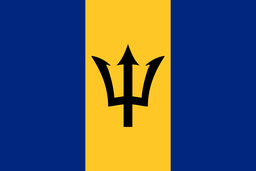







 Toptronic® Assistant · Electrical Field Toolbox
 Every licence carries the Toptronic® LIFETIME Warranty
No account needed to try · no card · up to 4 × 14 days